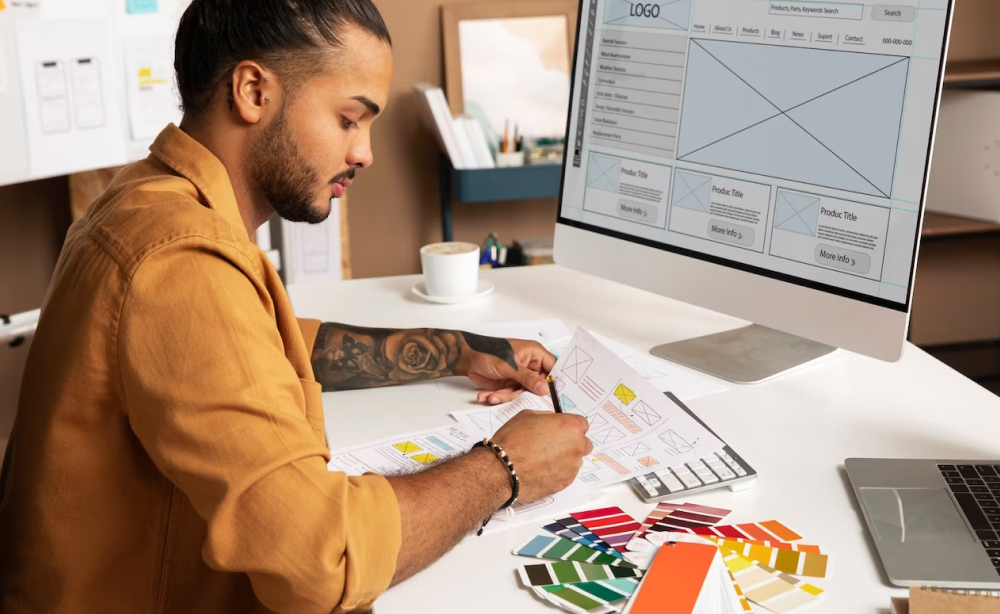
Design and Concept refers to the creative process of developing an idea or vision for a product, service, or experience, and bringing it into a tangible form. It is a crucial part of every project, from branding and user interfaces to product development and architecture. The design process helps solve problems, enhance user experience, and communicate the intended purpose effectively.
Here’s a breakdown of Design and Concept:
1. Design Process
The design process typically follows a series of stages, although the specific steps may vary depending on the field or project.
- Research & Discovery:
Understanding the problem, target audience, market trends, and gathering inspiration. This step might include competitor analysis, user research, and brainstorming.- Example: For a new app, you might conduct surveys to understand user pain points and look at competitor features.
- Ideation:
Generating creative ideas and solutions. In this stage, designers brainstorm and sketch multiple concepts or prototypes.- Example: Creating rough sketches of a website layout, or wireframes for app screens.
- Concept Development:
Refining ideas and exploring different directions. Once you have several ideas, you begin narrowing down the best concept, which will drive the visual and functional aspects of the design.- Example: Selecting a color scheme and font style for a brand or product based on user preferences and brand identity.
- Prototyping:
Turning ideas into prototypes or mockups that demonstrate how the design will work in the real world. This could be a digital prototype for websites or apps, or even physical prototypes for products.- Example: Creating a clickable prototype of a website for user testing or building a 3D mockup of a product design.
- Testing & Feedback:
Testing prototypes with real users to gather feedback and identify areas for improvement. This step can involve usability testing, focus groups, and A/B testing.- Example: Running user testing on a mobile app to observe how users interact with the interface and identify any difficulties they encounter.
- Final Design & Implementation:
Finalizing the design after incorporating feedback and refining it to meet the project’s goals. This is where the design is implemented in the real world or online, whether it’s a launched product, website, or marketing campaign.- Example: After refining your product design, you move to the final stage of production, or when your web design is launched to the public.
2. Types of Design Concepts:
Graphic Design:
Focuses on visual communication and is often used for branding, marketing materials, websites, and apps. Graphic designers work with elements like logos, typography, color schemes, and illustrations.
- Example: The design of a brand logo or a promotional banner.
Product Design:
Involves the creation of tangible items, from physical consumer products to industrial machinery. This encompasses everything from functionality to aesthetics and user experience.
- Example: Designing the form and function of a new smartphone, including its materials and user interface.
Web Design:
Focuses on designing websites with an emphasis on user experience (UX) and user interface (UI). It includes everything from layout and navigation to visual design and responsiveness across devices.
- Example: Designing a website with intuitive navigation, attractive graphics, and mobile responsiveness.
Interior Design:
Involves designing the layout, furniture, and overall aesthetics of indoor spaces. It takes into account the functionality of the space as well as the personal preferences of its occupants.
- Example: Designing the interior of a modern office space with ergonomics and aesthetics in mind.
Fashion Design:
Centers on creating clothing and accessories. Fashion designers work with materials, patterns, and trends to create garments that meet aesthetic and functional needs.
- Example: Designing a new line of eco-friendly clothing made from sustainable fabrics.
Game Design:
Focuses on designing the mechanics, rules, and user interface of video games. It also includes storytelling and the development of the overall gaming experience.
- Example: Creating the concept and gameplay for a mobile puzzle game.
UX/UI Design:
User Experience (UX) focuses on how users interact with a product or service, aiming to enhance usability, accessibility, and pleasure. User Interface (UI) is focused on the layout and visual design of a product's interface.
- Example: Designing a smooth, easy-to-navigate app interface with user-centered design principles.
3. Elements of Design:
- Line:
Lines can be straight, curved, or diagonal. They are fundamental in drawing and forming the structure of designs.- Example: The lines in a logo can create motion, direction, or separation.
- Shape:
Shapes can be geometric (like squares and circles) or organic (irregular, freeform). Shapes play a role in organizing information and creating emphasis.- Example: A circular logo design may represent unity or wholeness.
- Color:
Color has a strong psychological impact and conveys meaning. It can set the mood, create harmony, and enhance user experience.- Example: A website for a spa may use soft blues and greens to evoke calmness.
- Typography:
The style and arrangement of text. The choice of typefaces, spacing, and line length all contribute to the design's readability and tone.- Example: A modern tech brand might use sleek sans-serif fonts for a clean, minimalist feel.
- Texture:
Texture refers to the surface feel or look of an object. In digital design, texture often refers to how visual elements simulate physical texture.- Example: A wood-textured background in a website design can create a warm, rustic atmosphere.
- Space:
The area between and around elements in a design, also called "negative space." Proper use of space can enhance readability and focus attention.- Example: Using a lot of white space around text or images makes a website feel less cluttered and more open.
- Contrast:
The juxtaposition of different elements, such as colors, shapes, or sizes, to create emphasis and visual interest.- Example: Using a dark background with light text ensures legibility and highlights key information.
- Balance:
The distribution of visual weight in a design. This can be symmetrical (evenly distributed) or asymmetrical (uneven but balanced).- Example: A logo may have text on one side and a graphic on the other side to create a balanced design.
- Proximity:
Grouping related elements together helps to organize information and create relationships between objects.- Example: Placing a call-to-action button near the content it relates to on a website.
4. Creative Process in Design and Concept:
Inspiration:
The first step in any design project is to gather inspiration. This could come from nature, other artists, or even your own experiences.
- Example: Browsing design magazines, Pinterest, or visiting art galleries can help spark ideas.
Mood Boards & Sketches:
Designers often create mood boards to collect visual references or rough sketches of ideas before finalizing the design.
- Example: For a new branding project, creating a mood board with different logos, fonts, and color palettes.
Collaboration:
Working with other team members or stakeholders is crucial in the design process. Feedback from different perspectives helps refine the concept.
- Example: Collaborating with marketing teams, developers, or other stakeholders to ensure the design aligns with company goals and user needs.
Refinement:
After collecting feedback, designers refine their concepts, polish details, and finalize the designs.
- Example: Revising the colors, fonts, and images used in a website design based on user feedback or client requests.
Conclusion:
Design and concept are the foundation of creating engaging, functional, and aesthetically pleasing products, services, or experiences. Whether you’re designing a website, product, or brand identity, the goal is to solve problems creatively while ensuring the design is user-friendly and aligned with the project's objectives. If you need help or inspiration for a specific design project, feel free to ask for more detailed insights or examples!